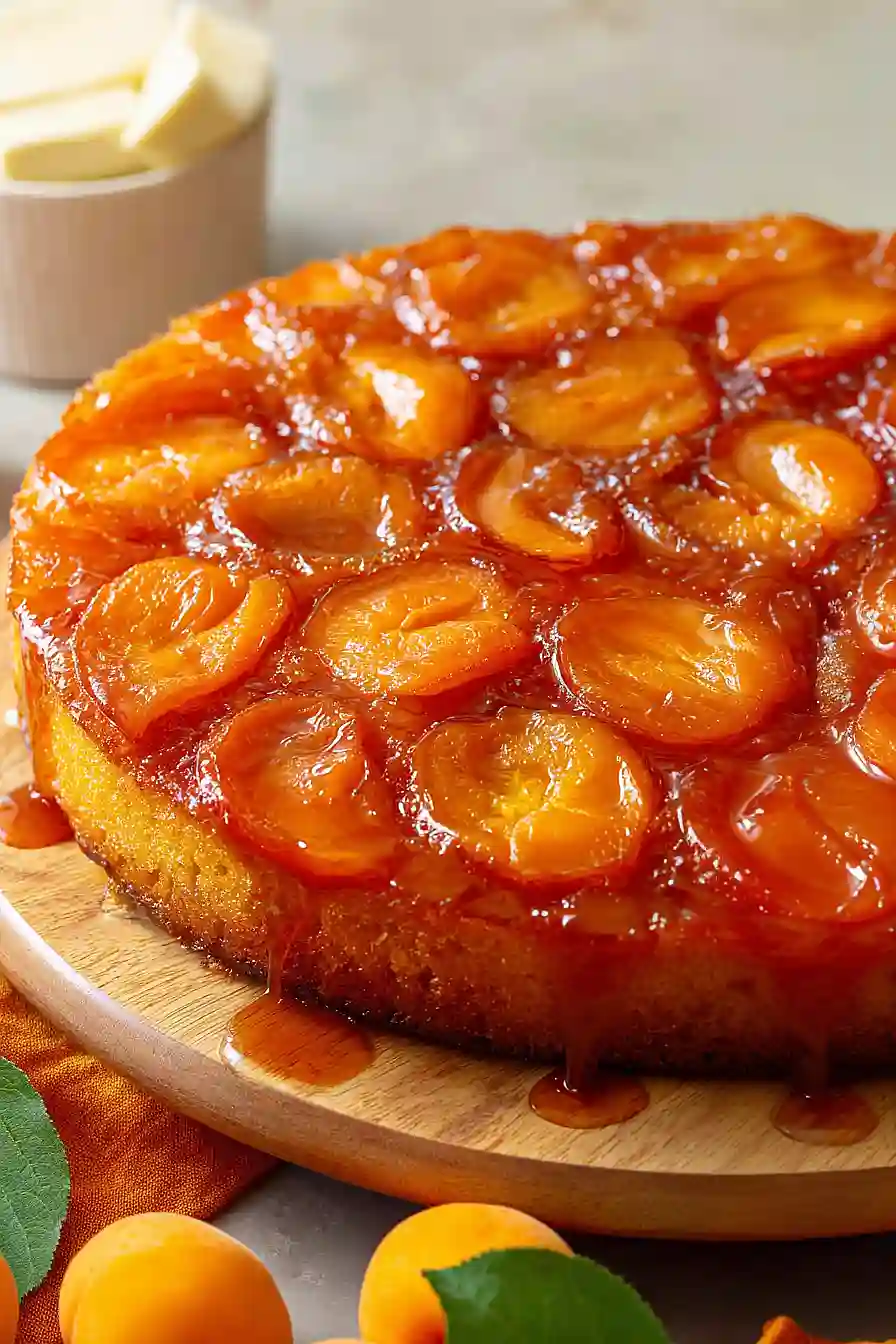
I’ve been obsessed with fresh apricots lately, and this upside-down cake has become my favorite way to show them off! The combination of caramelized sugar with those gorgeous halved apricots creates the most beautiful (and delicious) topping, and the hint of cardamom in the cake adds such a lovely warmth. Trust me, this is one of those recipes that looks fancy but is actually super easy to pull off.
| Preparation Time | 30-40 minutes |
| Cooking Time | 30-40 minutes |
| Total Time | 60-80 minutes |
| Level of Difficulty | Medium |
| Servings | 8 slices |
Estimated Nutrition
Estimated nutrition for the whole recipe (without optional ingredients):
- Calories: 2200-2500
- Protein: 22-26 g
- Fat: 65-75 g
- Carbohydrates: 400-440 g
Ingredients
For the apricot base:
- 1 lb fresh apricots (halved and stones removed)
- 1 cup sugar (I use Domino extra fine granulated)
- 1/3 cup water
- 1 tsp lemon zest
For the cake batter:
- 3/4 cup sugar
- 6 tbsp unsalted butter (room temperature, about 70°F)
- 2 large eggs
- 1/3 cup full-fat sour cream
- 1.5 tbsp pure vanilla extract
- 1.125 cups all-purpose flour
- 3/4 tsp baking powder
- 1/2 tsp salt
- 1/4 tsp ground cardamom
Step 1: Prepare the Pan and Make the Caramel
- 9-inch round cake pan
- 1 cup sugar
- 1/3 cup water
Preheat your oven to 350°F and lightly grease a 9-inch round cake pan with butter or cooking spray.
In a medium saucepan, combine 1 cup sugar and 1/3 cup water over medium-high heat, stirring occasionally until the sugar dissolves completely.
Stop stirring once it's dissolved and let it cook undisturbed for 5-8 minutes, watching carefully as it transforms from clear to pale yellow to deep golden amber.
Once it reaches a rich amber color (not dark brown), remove from heat immediately.
I like to use a light-colored pan or pot so I can see the color change clearly without guessing.
Step 2: Arrange Apricots and Add Caramel
- 1 lb fresh apricots
- caramel from Step 1
While the caramel cools slightly (about 1 minute), halve your fresh apricots and remove the stones.
Working quickly, arrange the apricot halves cut-side down in your prepared pan, packing them snugly together.
Pour the warm caramel carefully over the apricots, tilting the pan to distribute evenly.
The caramel will pool around and under the fruit, creating a gorgeous glaze when the cake is flipped.
Set the pan aside and let it cool while you prepare the batter.
Step 3: Cream Butter and Sugar, Then Build the Batter
- 6 tbsp unsalted butter
- 3/4 cup sugar
- 2 large eggs
- 1/3 cup full-fat sour cream
- 1.5 tbsp pure vanilla extract
In a large mixing bowl, beat the softened butter and 3/4 cup sugar together for 2-3 minutes until the mixture is pale, fluffy, and noticeably lighter in color.
Add the eggs one at a time, beating well after each addition to fully incorporate.
Pour in the sour cream and vanilla extract, mixing until just combined.
I find that beating in the sour cream slowly helps keep the batter smooth and prevents it from looking curdled.
The mixture should be creamy and homogeneous at this point.
Step 4: Combine Dry Ingredients and Finish the Batter
- wet batter mixture from Step 3
- 1.125 cups all-purpose flour
- 3/4 tsp baking powder
- 1/2 tsp salt
- 1 tsp lemon zest
- 1/4 tsp ground cardamom
In a separate small bowl, whisk together the flour, baking powder, salt, lemon zest, and ground cardamom.
Add this dry mixture to the wet batter from Step 3, stirring gently with a spatula until just combined—don't overmix, as this keeps the cake tender.
The batter should be smooth but not worked too much.
The cardamom adds a subtle warmth that pairs beautifully with apricots, and the lemon zest brightens the whole cake without making it taste citrusy.
Step 5: Assemble and Bake the Cake
- apricot and caramel base from Step 2
- batter from Step 4
Pour the batter from Step 4 over the apricots in the prepared pan, spreading it evenly with a spatula to cover the fruit completely.
The batter will rise during baking and create a tender cake base above the caramelized apricots.
Place the pan in your preheated 350°F oven and bake for 30-40 minutes, until a toothpick inserted into the cake portion (not the fruit) comes out clean or with just a few moist crumbs.
The cake should be golden brown on top.
Step 6: Cool and Flip the Cake
Remove the cake from the oven and let it cool in the pan for about 15 minutes—this allows the caramel to set slightly but remain pliable enough to release cleanly.
Run a thin knife around the edges of the pan to loosen the cake, then place a serving plate upside down on top of the pan.
In one confident motion, flip the pan and plate together so the cake lands fruit-side up on the plate.
If any apricots stick to the pan, gently scrape them free and press them back onto the cake.
Let the cake cool for a few more minutes before serving.
Step 7: Serve
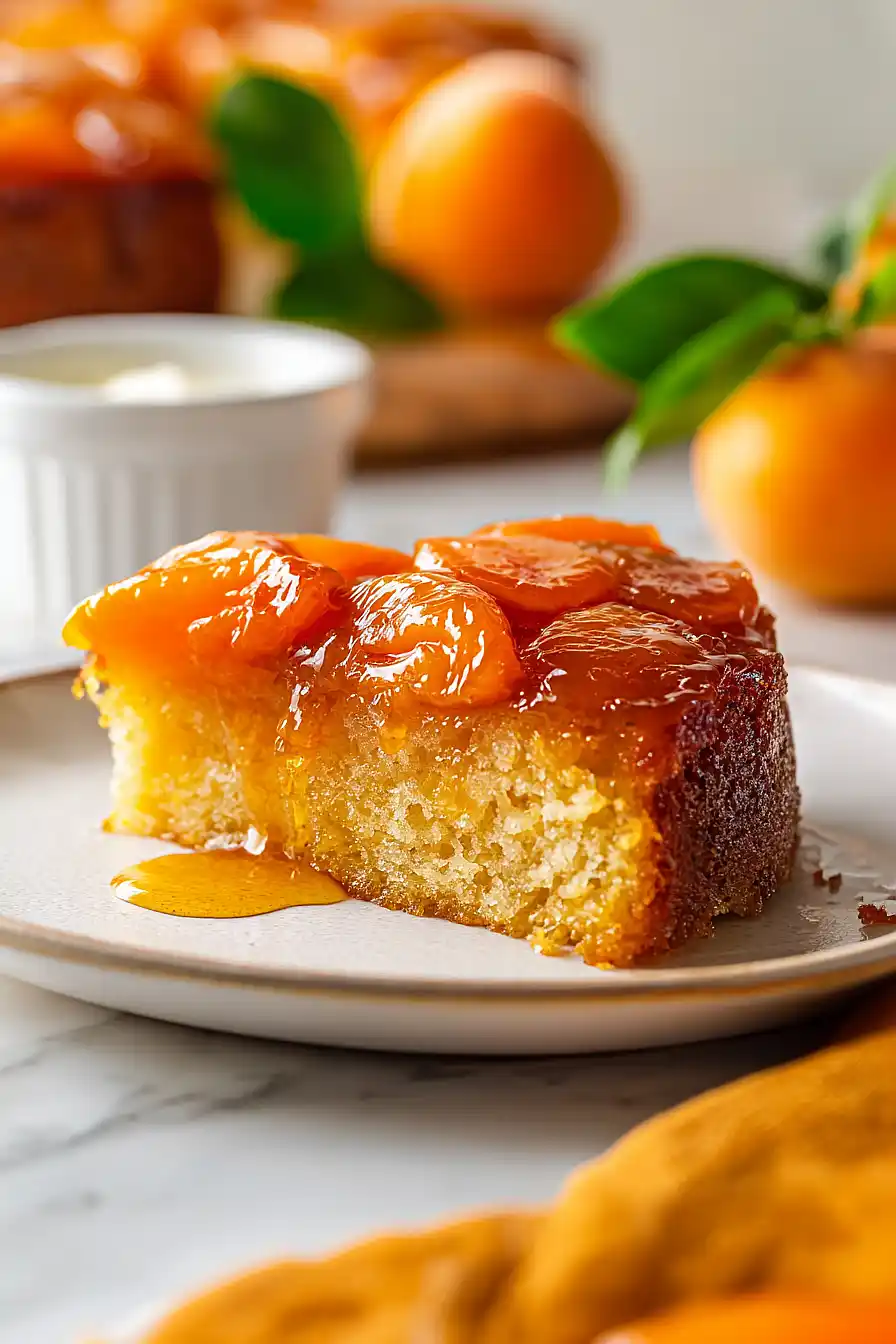
Slice the cake while still warm to showcase the beautiful caramelized apricots on top and the tender, moist crumb below.
The cake is best enjoyed warm or at room temperature, ideally within a few hours of baking when the caramel is still glossy and the cake is most tender.
Classic Apricot Upside Down Cake
Ingredients
Method
- Preheat your oven to 350°F and lightly grease a 9-inch round cake pan with butter or cooking spray. In a medium saucepan, combine 1 cup sugar and 1/3 cup water over medium-high heat, stirring occasionally until the sugar dissolves completely. Stop stirring once it's dissolved and let it cook undisturbed for 5-8 minutes, watching carefully as it transforms from clear to pale yellow to deep golden amber. Once it reaches a rich amber color (not dark brown), remove from heat immediately. I like to use a light-colored pan or pot so I can see the color change clearly without guessing.
- While the caramel cools slightly (about 1 minute), halve your fresh apricots and remove the stones. Working quickly, arrange the apricot halves cut-side down in your prepared pan, packing them snugly together. Pour the warm caramel carefully over the apricots, tilting the pan to distribute evenly. The caramel will pool around and under the fruit, creating a gorgeous glaze when the cake is flipped. Set the pan aside and let it cool while you prepare the batter.
- In a large mixing bowl, beat the softened butter and 3/4 cup sugar together for 2-3 minutes until the mixture is pale, fluffy, and noticeably lighter in color. Add the eggs one at a time, beating well after each addition to fully incorporate. Pour in the sour cream and vanilla extract, mixing until just combined. I find that beating in the sour cream slowly helps keep the batter smooth and prevents it from looking curdled. The mixture should be creamy and homogeneous at this point.
- In a separate small bowl, whisk together the flour, baking powder, salt, lemon zest, and ground cardamom. Add this dry mixture to the wet batter from Step 3, stirring gently with a spatula until just combined—don't overmix, as this keeps the cake tender. The batter should be smooth but not worked too much. The cardamom adds a subtle warmth that pairs beautifully with apricots, and the lemon zest brightens the whole cake without making it taste citrusy.
- Pour the batter from Step 4 over the apricots in the prepared pan, spreading it evenly with a spatula to cover the fruit completely. The batter will rise during baking and create a tender cake base above the caramelized apricots. Place the pan in your preheated 350°F oven and bake for 30-40 minutes, until a toothpick inserted into the cake portion (not the fruit) comes out clean or with just a few moist crumbs. The cake should be golden brown on top.
- Remove the cake from the oven and let it cool in the pan for about 15 minutes—this allows the caramel to set slightly but remain pliable enough to release cleanly. Run a thin knife around the edges of the pan to loosen the cake, then place a serving plate upside down on top of the pan. In one confident motion, flip the pan and plate together so the cake lands fruit-side up on the plate. If any apricots stick to the pan, gently scrape them free and press them back onto the cake. Let the cake cool for a few more minutes before serving.
- Slice the cake while still warm to showcase the beautiful caramelized apricots on top and the tender, moist crumb below. The cake is best enjoyed warm or at room temperature, ideally within a few hours of baking when the caramel is still glossy and the cake is most tender.